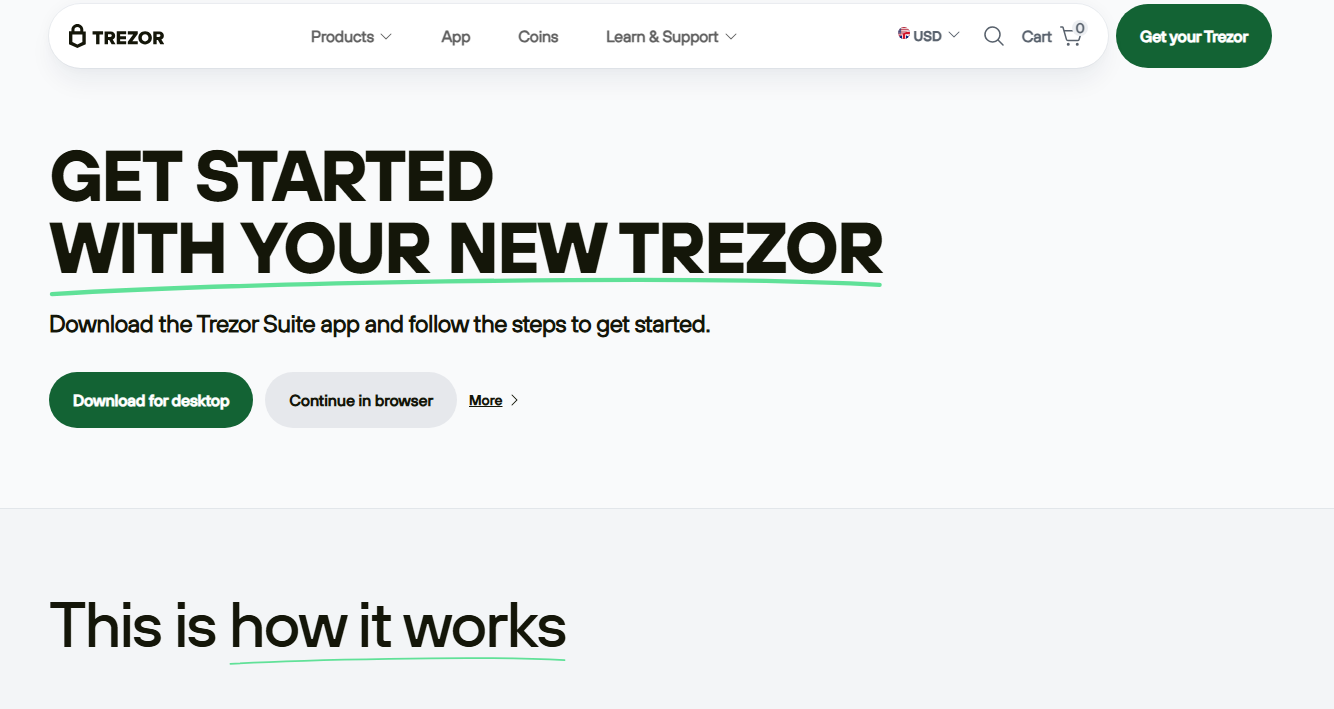
Trezor.io/Start is the official starting point for setting up a Trezor hardware wallet, but it represents more than a technical setup. It introduces a philosophy of self-custody where users define their own security standards instead of relying on exchanges, apps, or intermediaries. Trezor is built for people who want clarity, control, and independence in how they manage digital assets.
Trezor approaches crypto security as a shared responsibility between technology and the user. Trezor.io/Start reflects this idea by guiding users through setup in a way that emphasizes awareness rather than automation. Instead of hiding important steps, it highlights them, helping users understand what protects their funds and why each action matters.
This approach builds confidence and reduces long-term risk.
One of Trezor’s defining characteristics is its commitment to open-source development. Trezor.io/Start introduces users to this principle early, explaining how publicly auditable code reduces hidden vulnerabilities. Security is not based on promises, but on systems that can be inspected, challenged, and improved by the community.
Trust grows when systems are open to scrutiny.
Before setup begins, Trezor.io/Start explains how to verify that the device is brand new. Trezor wallets are never pre-configured and never include a recovery seed in the box. This ensures that no one else—manufacturer or third party—has access to your wallet credentials.
Security begins by eliminating unknown variables.
Trezor.io/Start directs users to install Trezor Suite, the official application for managing Trezor wallets. Trezor Suite acts as a private workspace where users can manage assets, review balances, and verify transactions. All sensitive operations require confirmation on the hardware device, keeping private keys isolated from connected computers.
This separation reduces exposure to malware and remote threats.
During setup, the Trezor device generates a recovery seed that represents full ownership of the wallet. Trezor.io/Start treats this moment as fundamental, encouraging users to slow down and understand its importance. Whoever controls the recovery seed controls the assets—there are no exceptions.
Trezor encourages durable, offline storage and long-term thinking.
Rather than focusing on extreme scenarios, Trezor.io/Start helps users understand common risks they are most likely to face. These include phishing attempts, compromised computers, and social engineering. By focusing on realistic threats, Trezor helps users develop practical habits that improve everyday security.
Prepared users make fewer mistakes.
Trezor wallets support a wide range of cryptocurrencies, including Bitcoin, Ethereum, and many alternative assets. Through Trezor Suite, users can manage diverse portfolios while maintaining strong key isolation. Trezor.io/Start explains how this design allows users to grow their holdings without compromising their security principles.
Flexibility is paired with discipline.
Privacy is not optional with Trezor—it is foundational. Trezor.io/Start highlights that users are not required to create accounts, submit personal information, or enable tracking. Transactions are verified locally, and user activity is not monitored or stored.
This design aligns with the original ethos of decentralized finance.
Trezor.io/Start focuses on teaching concepts, not just procedures. By understanding why steps exist, users are better prepared to adapt as technology evolves. This knowledge reduces dependence on third parties and helps users stay secure even as threats change.
Security becomes a habit, not a checklist.
Trezor.io/Start is more than an installation guide—it is an entry point into responsible self-custody. By choosing Trezor, users choose transparency, privacy, and long-term independence. With open-source foundations and a user-education mindset, Trezor offers a balanced and principled way to protect digital assets in a changing world.